






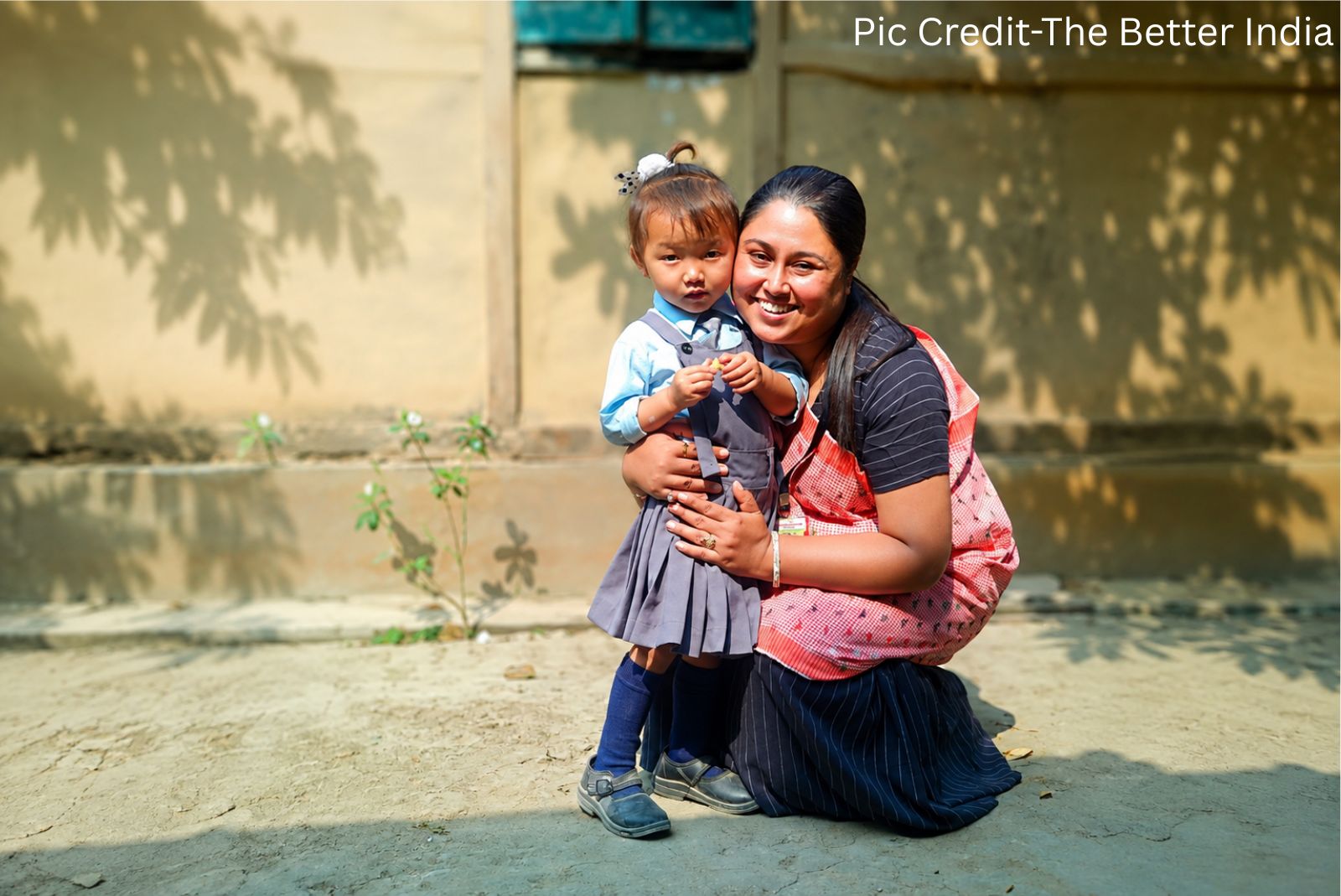
Education has the power to change lives, but for thousands of tribal families across India, even basic learning remains out of reach. Determined to bridge this gap, Assam-born Ananya Paul Dodmani dedicated more than two decades of her life to empowering marginalized indigenous communities. What started as a small initiative under a banyan tree with just five children has now grown into Tribal Connect, a movement that operates more than 160 community learning centres across India, providing education, food, shelter, and hope to thousands.
A Childhood That Sparked a Mission
Growing up in Assam, Ananya was surrounded by children from Santhal and other tribal communities. While studying in school, she noticed a stark difference between her life and theirs. Many of her tribal classmates never returned after school vacations, often due to illness, poverty, or lack of healthcare.
One incident left a lifelong impact on her. She watched a shopkeeper deceive a tribal woman by refusing to return the correct change, knowing she could not identify currency notes. That moment made Ananya realize that even the most basic education could protect people from exploitation and help them lead more dignified lives.
While she was still in school, she began gathering tribal children in an empty classroom and teaching them how to read, write, identify currency, and understand everyday essentials. Soon, her classmates joined the initiative, and together they started visiting nearby villages every weekend to teach children and raise funds through cultural events and football matches.
A Personal Tragedy That Changed Everything
In 2002, Ananya’s life took an unexpected turn when her father was kidnapped and held captive for seven days. He endured severe torture before escaping by jumping from a third-floor building and running several kilometres to safety.
The traumatic experience could have filled Ananya with fear and anger. Instead, it strengthened her resolve. She came to believe that a lack of education, opportunities, and awareness often pushed vulnerable communities toward violence and illegal activities. Rather than blaming people, she chose to address the root cause.
In 2003, she started her first learning centre in the same village where her father had been held hostage. With no infrastructure or funding, she began teaching five children under a banyan tree. That simple classroom became the foundation of a nationwide movement.
Tribal Connect: A Safe Space for Learning and Growth
Over the years, Ananya transformed her vision into Tribal Connect, formally established in 2019. Today, the organisation works with tribal communities including the Karbi, Dima and Kuki tribes of Assam, the Siddis of Karnataka, and the Kunbis of Goa and Uttar Kannada.
The centres offer far more than education. Children receive free meals three times a day, accommodation when needed, and a safe environment where they can learn without fear. Mothers escaping domestic violence are also given temporary shelter and support.
Understanding that language can be a barrier, Ananya recruits local youth to teach children in their native languages, making learning more accessible and culturally relevant.
Empowering Entire Communities
Ananya believes that education alone is not enough to create lasting change. Tribal Connect also focuses on livelihood generation and community development.
Community farming initiatives allow local families to grow vegetables and grains, which are used in community kitchens while the surplus is sold in local markets. The organisation also provides employment opportunities to local youth, ensuring that every learning centre is managed by members of the community itself.
Another unique initiative is the inclusion of village grandmothers in the centres. They help care for children, tell traditional stories, and preserve indigenous culture while creating a nurturing environment for young learners.
Supporting Women’s Health and Dignity
Beyond education, Ananya has been working extensively on menstrual health awareness among tribal women. Through workshops, she has reached over 90,000 women, educating them about menstrual hygiene, sustainable sanitary pads, and eco-friendly menstrual cups.
Her efforts have helped break long-standing taboos while improving the health and confidence of countless women living in remote areas.
Rebuilding Every Time
Working in remote and conflict-prone regions comes with constant challenges. Heavy rains often destroy temporary learning centres, while wild elephants sometimes damage the facilities. Yet every setback is met with determination.
For Ananya, a community centre is not defined by walls or buildings. Whether it is a permanent structure or a temporary tent, what matters is creating a space where children feel safe, valued, and inspired to learn.
Her dedication has earned her the prestigious Karamveer Chakra Award, but she believes the biggest reward is watching children from difficult backgrounds grow into confident individuals with dreams and opportunities.
A Legacy of Hope
For over 22 years, Ananya Paul Dodmani has shown that meaningful change begins with compassion and persistence. From teaching five children under a tree to leading a network of more than 160 learning centres supported by hundreds of volunteers, her journey proves that one person’s determination can transform entire communities.
Her story is a powerful reminder that education is not merely about books and classrooms—it is about restoring dignity, healing trauma, and giving every child the chance to build a better future.