






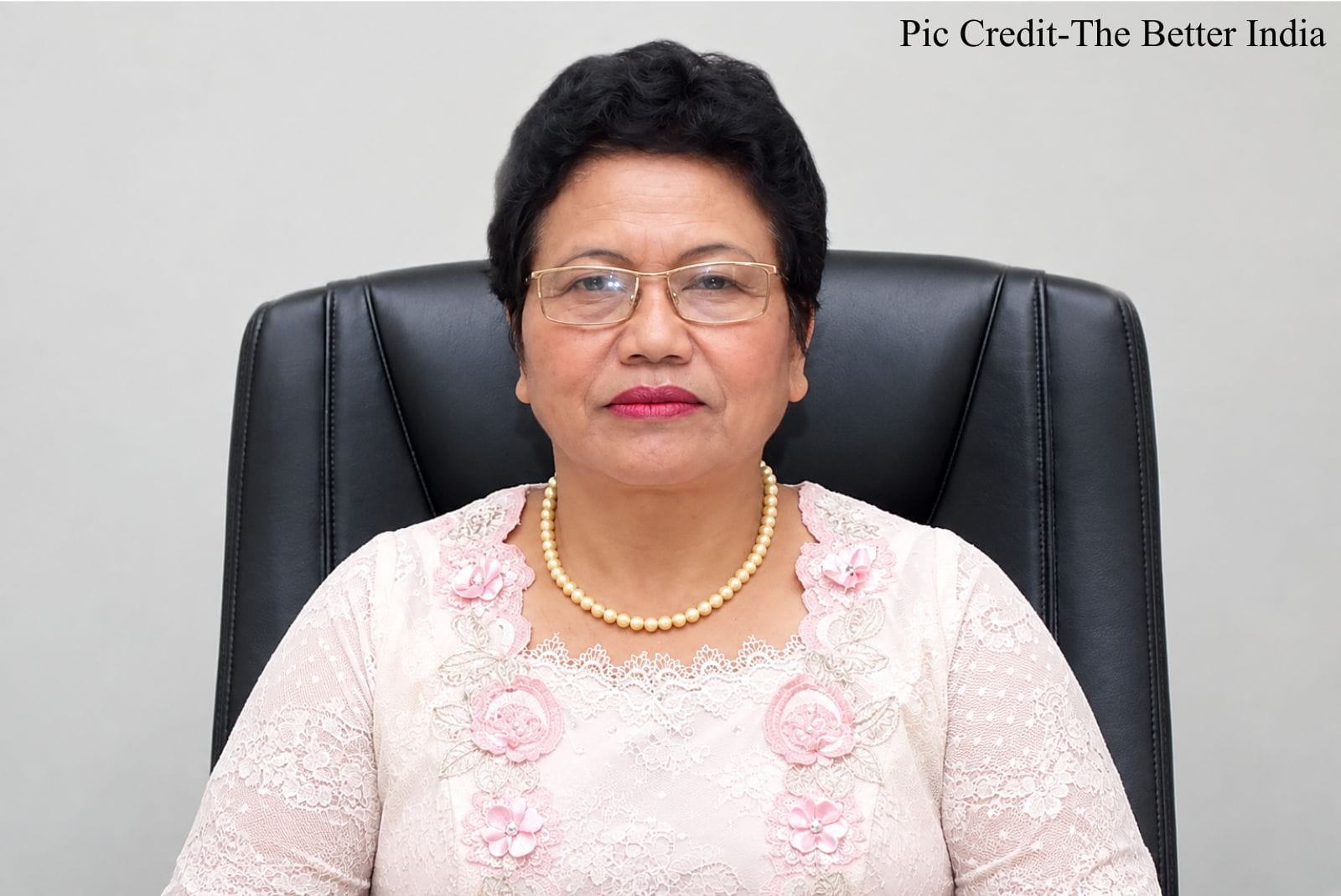


Some people dedicate their lives to building businesses, careers, or personal success. Pi Sangkhumi dedicated hers to something much bigger—the fight for justice and equality for women in Mizoram. For more than four decades, she worked tirelessly to challenge deeply rooted social norms, advocate for legal reforms, and ensure that women had the right to live with dignity. While her name may not be widely known outside Northeast India, her contribution has transformed the lives of countless women and left a lasting impact on Mizo society.
Born and raised in Mizoram, Pi Sangkhumi witnessed gender inequality from an early age. As a young girl, she saw women being abandoned by their families without any financial support or legal protection. Many had no rights over family property, and even gifts received during marriage were often not considered their own. These experiences deeply affected her and made her realize that the problem was much larger than individual families. The real challenge lay in outdated laws, traditional customs, and a lack of awareness about women’s rights. Instead of accepting the situation as inevitable, she decided to devote her life to changing it.
After completing her education, Pi Sangkhumi became a teacher, but education alone was never her only mission. She believed that empowering women required legal awareness as much as academic learning. In 1974, she joined the Mizo Hmeichhe Insuihkhawm Pawl (MHIP), the largest women’s organization in Mizoram. Through the organization, she began campaigning for reforms related to marriage, divorce, inheritance, and property rights. At a time when such discussions were considered controversial, she continued raising these issues with courage and determination.
For years, Pi Sangkhumi and her fellow activists submitted recommendations to the government, met policymakers, organized awareness campaigns, and demanded legal reforms that would provide women with greater equality and protection. Their efforts were not met with immediate success. Change came slowly, often after years of persistence and public engagement. Eventually, the Mizoram State Law Commission began reviewing the Mizo Marriage, Divorce, and Inheritance Bills, marking a significant step toward strengthening women’s legal rights in the state. While legal reforms take time, Pi Sangkhumi’s advocacy played an important role in keeping these issues at the center of public discussion.
Her own life was shaped by hardship as well. During the Mizo movement, she lost her father, a tragedy that brought immense personal challenges to her family. Despite financial difficulties, she continued her education with the help of scholarships and completed higher studies in Shillong. Rather than allowing adversity to limit her ambitions, she transformed her experiences into a lifelong commitment to public service.
Beyond legal reform, Pi Sangkhumi has worked extensively for survivors of domestic violence, victims of sexual assault, women’s education, and broader human rights issues. Recognizing that many rural women could not fully understand complex legal documents written in English, she also helped translate important laws into the Mizo language. This simple but powerful initiative allowed ordinary women to understand their rights and make informed decisions about their lives.
Today, Pi Sangkhumi is regarded as one of the strongest voices of the Mizo women’s movement. Her journey proves that meaningful social change rarely happens overnight. It is built through years of patience, persistence, and the courage to question systems that have existed for generations. By believing that laws can change society, she helped create opportunities for thousands of women to live with greater equality, dignity, and hope. Her legacy serves as a reminder that one determined individual can inspire change that lasts for generations.