








Long before smartphones, artificial intelligence, and high-speed internet became essential learning tools, knowledge often came from books and an endless curiosity to understand the world. For a young boy growing up in a small village in Karnataka, the universe existed not on a screen but inside the pages of encyclopaedias his father brought home.
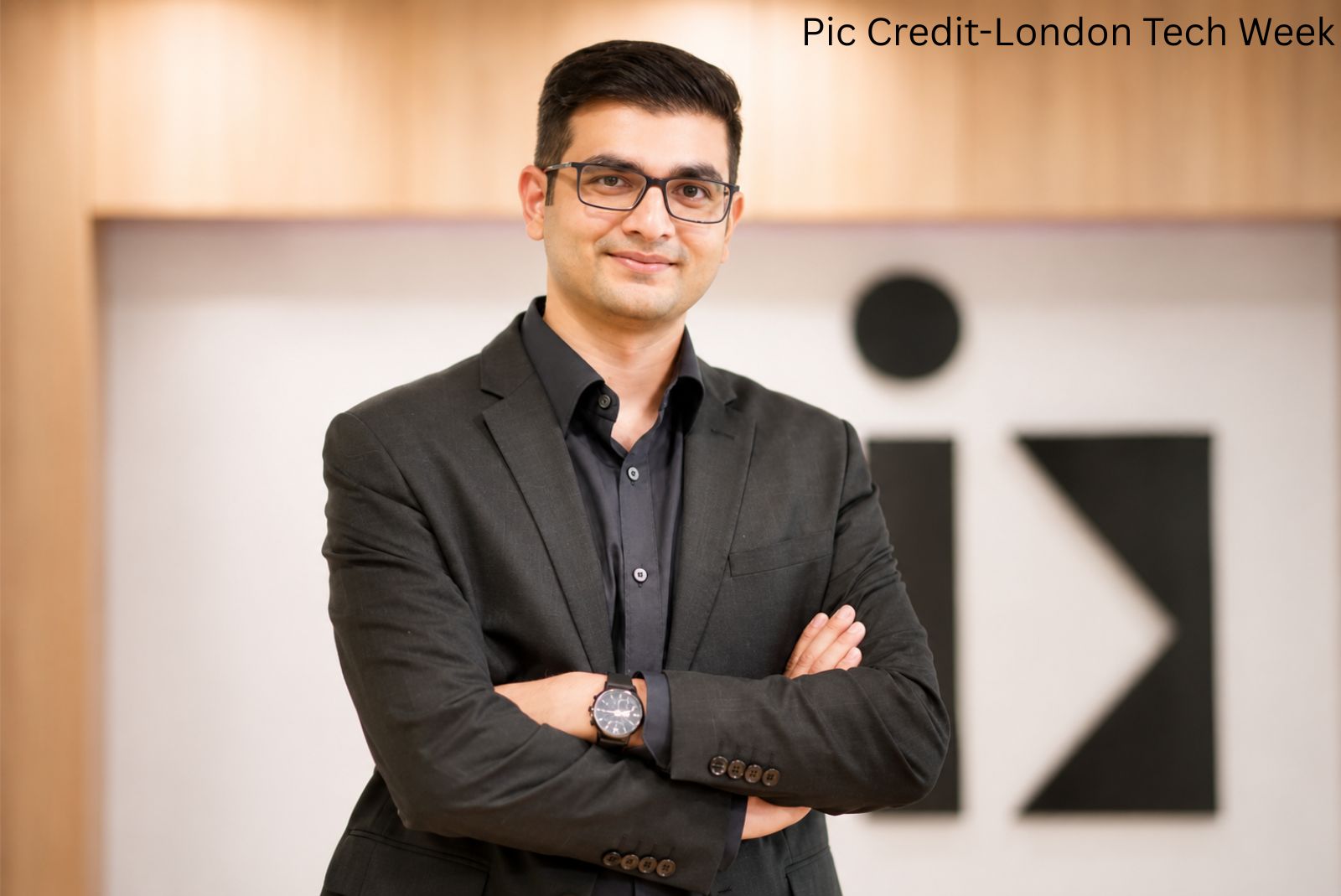
That boy was Awais Ahmed, and today he is the co-founder of Pixxel, one of India’s most successful private space technology startups.
His journey proves that groundbreaking ideas don’t always begin in big cities or high-tech laboratories. Sometimes, they begin in a quiet village where curiosity is the only technology available.
Awais Ahmed grew up in Aldur, a village in Karnataka’s Chikkamagaluru district. During his childhood, internet access was almost non-existent. Unlike today’s students who can instantly search for answers online, Awais relied on books to satisfy his fascination with space and astronomy.
Recognizing his son’s growing interest, his father regularly brought home encyclopaedias filled with stories about planets, galaxies, and the universe. Those books became Awais’s classroom, nurturing a dream that would eventually reach far beyond Earth’s atmosphere.
As his passion grew, Awais joined the Birla Institute of Technology and Science (BITS) Pilani to study Mathematics. College provided him with opportunities to transform curiosity into practical experience. He became part of Team Anant, BITS Pilani’s student satellite programme developed in collaboration with ISRO, where he gained valuable exposure to satellite engineering.
He also served as the engineering lead of Hyperloop India, one of the finalist teams in the prestigious SpaceX Hyperloop Pod Competition. These experiences strengthened both his technical skills and entrepreneurial vision.
The defining moment came in 2018 while Awais and his college batchmate, Kshitij Khandelwal, were participating in the IBM Watson AI Challenge. Their project required highly detailed satellite imagery to predict crop health. However, they quickly discovered that existing satellite data lacked the precision needed to detect subtle environmental changes.
Conventional satellites capture Earth using a limited number of broad spectral bands. As a result, early signs of crop diseases, methane leaks, illegal mining, industrial pollution, and other environmental threats often remain invisible until considerable damage has already occurred.
Instead of accepting this limitation, the two young innovators decided to build a solution themselves.
In February 2019, while still in their early twenties, Awais and Kshitij founded Pixxel. With money borrowed from Awais’s father and living on a modest monthly budget of around ₹10,000, they began building hyperspectral imaging satellites capable of capturing Earth in extraordinary detail.
What started as a college startup soon attracted global attention.
Today, Pixxel has raised approximately $95 million in funding from renowned investors, including Google, Radical Ventures, and Lightspeed, making it the world’s highest-funded hyperspectral imaging company.
In 2025, the company successfully deployed all six of its Firefly satellites into orbit. Unlike conventional Earth observation satellites, Pixxel’s satellite constellation captures images in more than 250 spectral bands at a five-metre resolution, generating nearly 50 times more spectral information than traditional satellite systems.
This breakthrough technology has enormous real-world applications. Farmers can identify crop stress weeks before visible damage appears, enabling timely interventions that improve yields. Governments and environmental agencies can detect methane leaks, monitor industrial pollution, identify illegal mining activities, and track contaminants entering rivers and lakes.
Beyond agriculture and environmental protection, Pixxel’s data supports climate monitoring, disaster management, and sustainable resource planning, making satellite intelligence more accessible than ever before.
The company’s rapid progress has earned global recognition. TIME included Pixxel among its 100 Best Inventions of 2023, while the World Economic Forum named it a Technology Pioneer in 2024. In the same year, Pixxel became the first Indian private space startup to secure a contract with NASA and also signed a five-year agreement with the U.S. National Reconnaissance Office.
Awais Ahmed has also received individual recognition, featuring in Forbes 30 Under 30, MIT Innovators Under 35, and Fortune India’s 40 Under 40. His co-founder, Kshitij Khandelwal, has likewise earned a place in the Forbes 30 Under 30 list.
Yet, perhaps the most inspiring aspect of Awais’s journey is not the awards, funding, or satellites. It is the reminder that innovation begins with curiosity.
Growing up without internet access could have limited his opportunities. Instead, it strengthened his desire to ask questions, explore possibilities, and solve problems that others overlooked.
Today, satellites built by the boy who once learned about space through encyclopaedias are orbiting Earth, helping protect the environment, improve agriculture, and reshape the future of satellite intelligence.
Awais Ahmed’s story is a powerful reminder that while technology can accelerate learning, it is curiosity that sparks discovery. Sometimes, a dream born in a small village can truly reach the stars.