










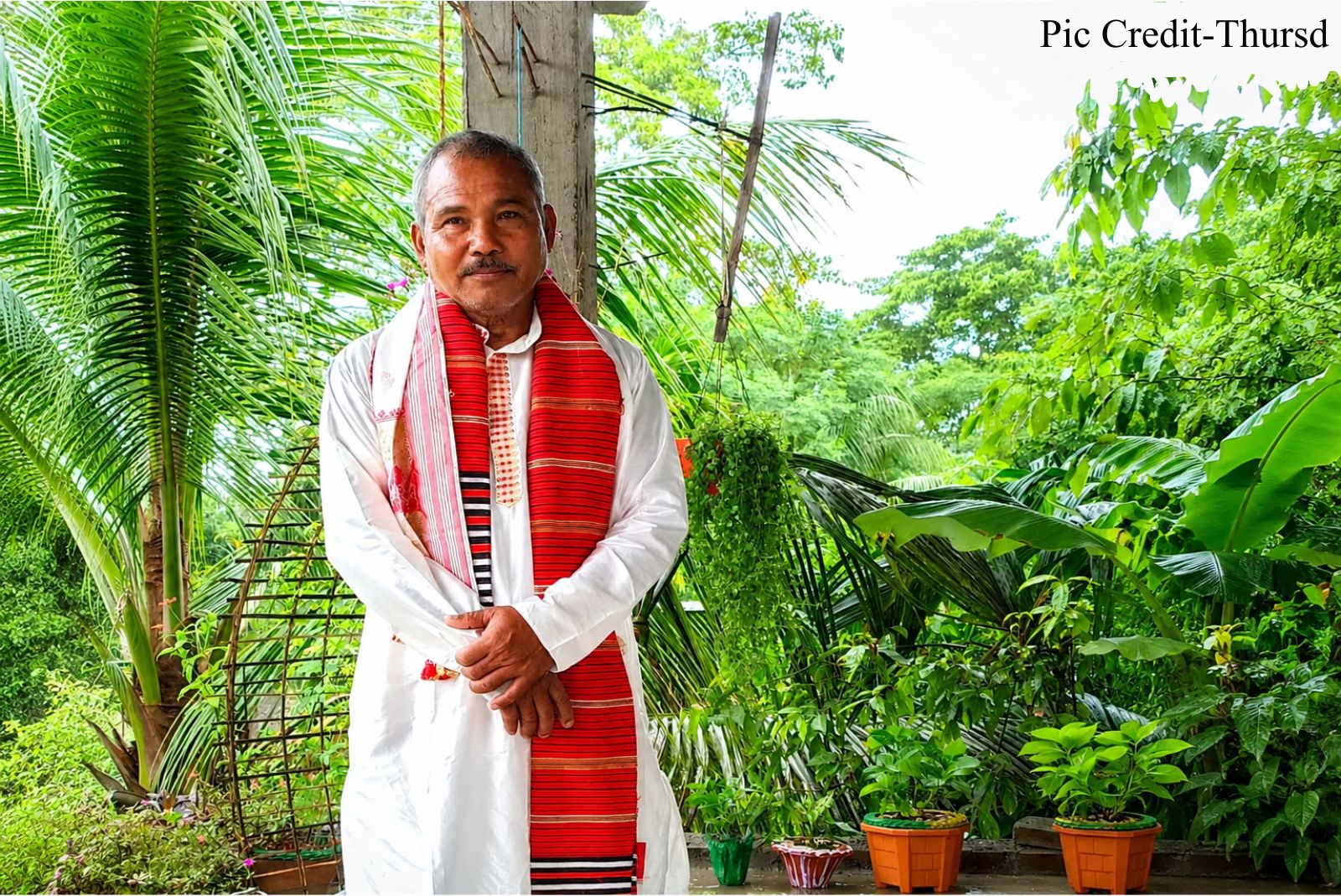
In a world where environmental degradation is often seen as an irreversible problem requiring large-scale intervention, the story of Jadav Payeng stands as a rare and powerful example of what one determined individual can achieve. Over more than four decades, he transformed a barren sandbar on the Brahmaputra River into a dense, living forest that now supports hundreds of species.
Today, this forest—popularly known as the Molai Forest—spans over 550 hectares (approximately 1,360 acres), making it larger than many urban parks around the world. But its origin was not a planned government project or a funded environmental initiative. It began with a deeply personal moment of realization.
The Incident That Sparked a Movement
In 1979, a young Payeng was living in Majuli, Assam, an area frequently affected by river erosion and seasonal floods. During one such flood, he came across a heartbreaking sight on a barren sandbar near the Brahmaputra River: dozens of dead snakes scattered across the land. The animals had died because there was no vegetation or shelter to protect them from the extreme heat.
This incident left a lasting impact on him. It made him reflect on how deforestation and ecological imbalance can destroy entire habitats, even for resilient species like snakes. Instead of treating it as a tragic but isolated event, he decided to respond with action.
Beginning the Journey with Bamboo Saplings
Without formal training in forestry or environmental science, Payeng began his work by planting bamboo saplings on the sandy, infertile land. The conditions were extremely difficult—loose soil, high temperatures, and frequent flooding made survival of plants nearly impossible.
However, he persisted. Day after day, year after year, he continued planting trees. Gradually, he expanded beyond bamboo and introduced native species such as arjun, koroi, and other plants suited to the local ecosystem. These species were carefully chosen because they could survive in flood-prone conditions and help restore soil stability.
At first, many locals doubted his efforts. Some believed the sandbar would never support a forest. Others saw it as a futile exercise. But Payeng continued without external validation or institutional support.
Transformation of a Barren Land into a Forest
Over time, his consistent efforts began to show results. The once lifeless sandbar started turning green. As vegetation spread, the soil quality improved, enabling more plant species to grow naturally. What began as a small patch of bamboo gradually evolved into a dense forest ecosystem.
Today, the Molai Forest is a self-sustaining ecosystem spread across hundreds of hectares. It is often compared to urban green spaces like New York’s Central Park—not only for its size but for its ecological importance.
A Thriving Ecosystem Emerges
As the forest expanded, wildlife began to return. Elephants, deer, wild boars, monkeys, and rabbits found shelter within its growing canopy. Over time, even larger species such as rhinoceroses were reported to have entered the area. Bird populations also flourished, with numerous migratory and native species making the forest their home.
There have even been occasional reports of Bengal tigers passing through the region, highlighting the ecological connectivity of the habitat. The forest now plays a critical role in maintaining biodiversity in the region, providing food, shelter, and breeding grounds for a wide variety of animals.
Beyond wildlife protection, the forest also helps in preventing soil erosion—a major issue in Assam due to river dynamics. The dense vegetation stabilizes the sandbar, reducing land loss during floods and improving environmental resilience.
Life of Simplicity and Dedication
Despite gaining national and international recognition, Jadav Payeng has continued to live a simple life. He does not operate as part of a large organization or environmental NGO. Instead, he remains closely connected to the land he nurtured for decades.
He earns his livelihood through cattle farming, even as he continues to care for the forest daily. At times, wildlife from the forest has caused damage to his livestock, but he has never allowed such challenges to deter his commitment. His relationship with the forest is not transactional—it is deeply personal and rooted in responsibility.
Recognition and Global Attention
In recognition of his extraordinary contribution to environmental conservation, Payeng was awarded the Padma Shri in 2015, one of India’s highest civilian honors. His story has also been featured in documentaries, international media reports, and environmental studies.
Researchers and environmentalists often cite his work as an example of “afforestation through natural succession,” where human intervention initiates a process that eventually becomes self-sustaining. His work has inspired discussions on climate resilience, biodiversity restoration, and grassroots environmental action.
Lessons from the Forest Man
The journey of Jadav Payeng offers several important lessons. First, environmental change does not always require massive funding or advanced technology. Sometimes, consistent individual effort can initiate large-scale transformation.
Second, patience is essential. His forest did not grow in a year or two—it took decades of continuous effort. Finally, his story highlights the importance of emotional connection with nature. His actions were driven not by obligation but by a deep sense of responsibility toward living beings.
To end with,
What began with a tragic sight on a barren sandbar has become one of the most inspiring environmental success stories in modern India. Through decades of dedication, Jadav Payeng created a thriving ecosystem that now supports countless species and protects the fragile environment of the Brahmaputra region.
His life is a reminder that meaningful change often starts with a single step—or in his case, a single sapling.