








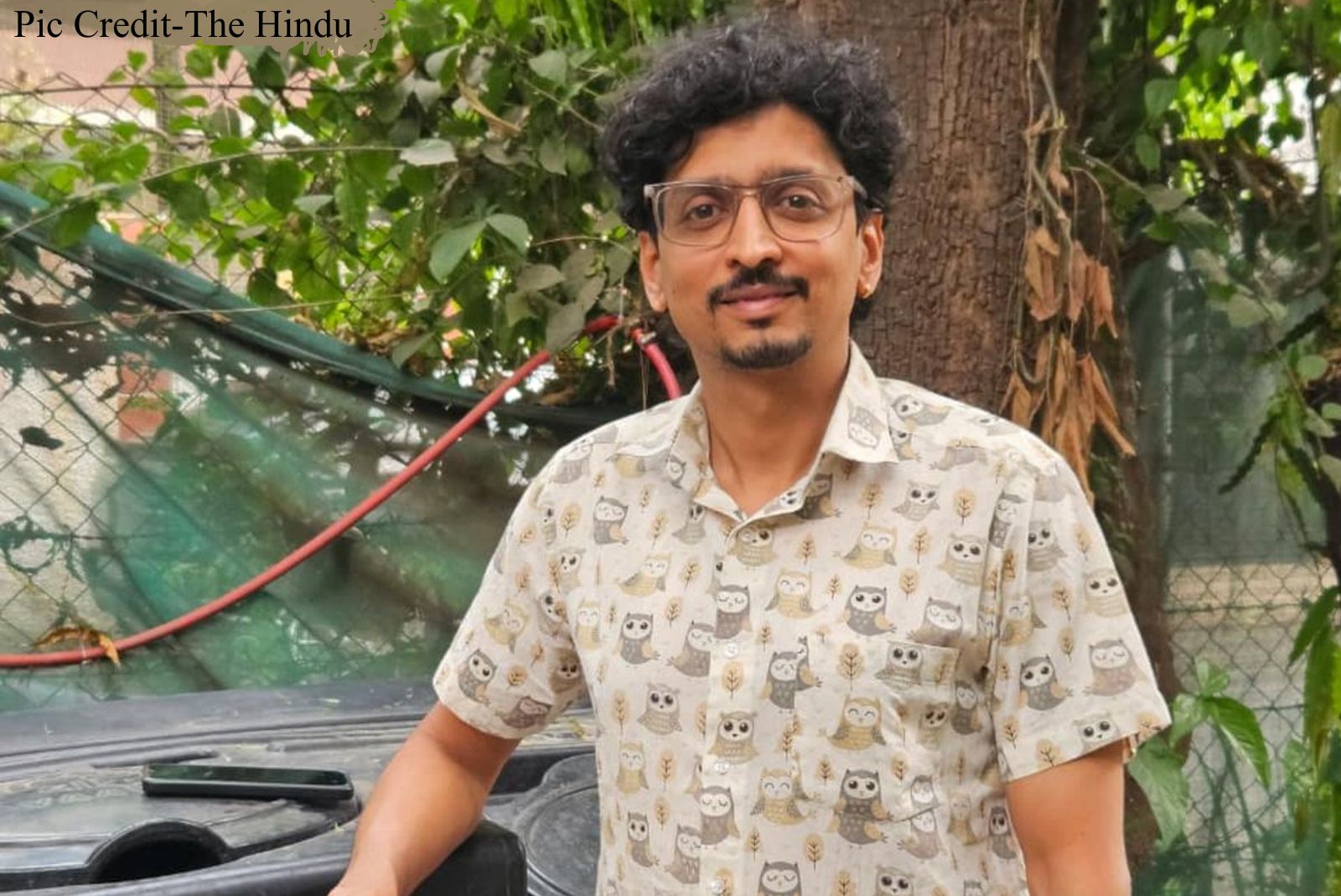
For nearly seven years, Pune-based IIT engineer Priyadarshan Sahasrabuddhe has been quietly redefining how households think about everyday waste. While most urban homes depend on LPG cylinders for cooking, his kitchen runs on something far more unusual—biogas generated from daily organic waste. What began as a personal experiment has now evolved into a practical model for sustainable living that is attracting attention from households, institutions, and even commercial kitchens.
Rethinking Household Waste
In most Indian cities, kitchen waste is treated as a disposal problem rather than a resource. Vegetable peels, fruit skins, leftover food, and other organic matter are typically thrown away, eventually ending up in landfills. This not only increases the burden on waste management systems but also contributes to greenhouse gas emissions as organic matter decomposes without control.
Priyadarshan Sahasrabuddhe, trained as an engineer from an Indian Institute of Technology background, began questioning this linear “use and throw” cycle. He observed that a significant portion of household waste was biodegradable and energy-rich. Instead of letting it go to waste, he explored whether it could be converted into usable fuel.
The Turning Point: A Home-Based Experiment
In 2019, he installed a Vaayu biodigester system at his residence in Pune. The system is designed to process organic kitchen waste through anaerobic digestion—a natural biological process in which microorganisms break down food waste in the absence of oxygen. As the waste decomposes, it produces biogas, primarily composed of methane, which can be used for cooking.
What made the experiment remarkable was its simplicity and consistency. On average, around 10–12 kilograms of kitchen waste per day can generate approximately 700–800 litres of biogas, depending on the composition of waste and system efficiency. For a typical household, this is often sufficient to meet daily cooking requirements, significantly reducing or even eliminating the need for LPG cylinders.
How the Technology Works
The biodigester functions in a closed system where kitchen waste is fed into a sealed chamber. Inside, anaerobic bacteria break down the organic material over time. The process produces two main outputs: biogas and slurry.
The biogas is collected and directly piped to a cooking stove, similar to LPG usage but generated on-site. The leftover slurry, far from being waste, is nutrient-rich and can be used as an organic fertilizer for plants and home gardens. This creates a complete circular system where waste is continuously reused rather than discarded.
Unlike traditional biogas setups that require large space or cattle dung, compact modern biodigesters are designed specifically for urban households. This makes them suitable for apartments, independent homes, and small institutions.
Life Without LPG Dependency
One of the most significant outcomes of this system is energy independence. Priyadarshan Sahasrabuddhe has reportedly been cooking without LPG for extended periods, relying entirely on the biogas produced from his household waste.
This independence became particularly valuable during times when LPG supply delays or price fluctuations affected many households. While others depended on cylinder refills, his kitchen continued functioning without interruption, powered entirely by daily waste generation.
Beyond convenience, this also translates into long-term cost savings. Although the initial installation of a biodigester involves investment, operational costs are minimal since the fuel source is essentially free.
Expanding Beyond a Single Home
What started as a personal initiative has gradually expanded into a wider adoption model. Reports suggest that the Vaayu biodigester system is now installed in more than 350 homes across India. Collectively, these systems are estimated to offset thousands of LPG cylinders annually, contributing to reduced fossil fuel consumption and lower household emissions.
The technology has also drawn interest from hotels, corporate offices, and institutional canteens, where large quantities of food waste are generated daily. In such environments, biodigesters not only reduce waste disposal costs but also provide a steady supply of renewable cooking fuel.
Environmental and Practical Impact
The broader significance of this innovation lies in its dual impact. First, it addresses the pressing issue of organic waste management in urban areas. Second, it provides a decentralized source of clean energy that reduces dependence on fossil fuels.
By converting waste into energy, the system helps reduce methane emissions from landfills—a major contributor to climate change. At the same time, it promotes the idea of circular economy living, where resources are continuously reused rather than discarded after a single use.
A Model for Sustainable Living
Priyadarshan Sahasrabuddhe’s journey highlights how engineering innovation can be applied to everyday life challenges. Instead of relying on large-scale industrial solutions, his approach focuses on household-level transformation. It shows that sustainability does not always require complex infrastructure—sometimes it begins right in the kitchen.
His work continues to inspire people to rethink waste not as a burden but as a resource. As awareness grows, such systems may play a key role in shaping cleaner, more self-sufficient urban living in the future.
In a world increasingly focused on sustainability and energy efficiency, his experiment stands as a reminder that some of the most impactful innovations are not futuristic inventions, but practical solutions already within reach of everyday households.