






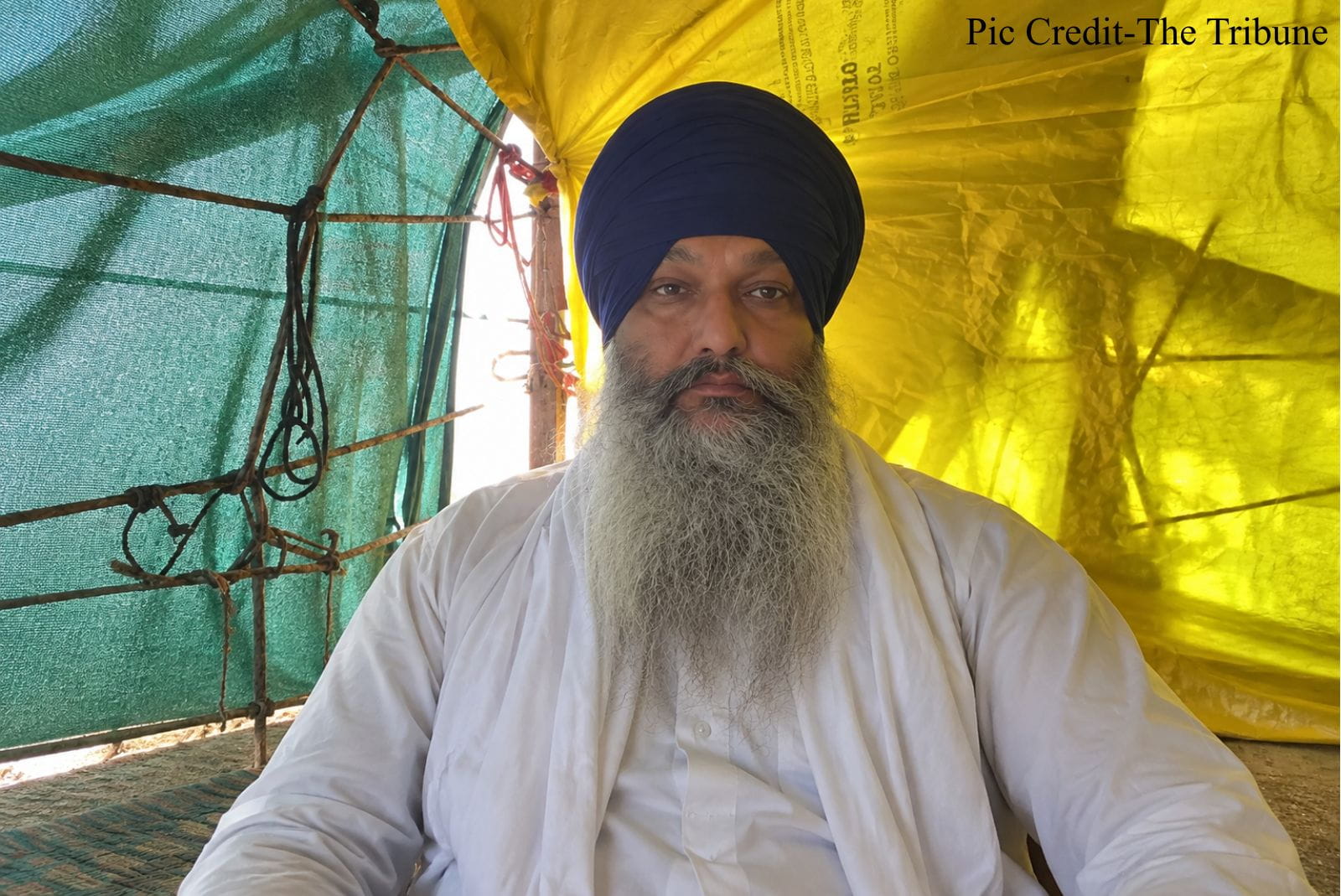



The story of Gurjeet Singh Khalsa is one of extraordinary endurance, deep conviction, and an unusual form of protest that captured attention across Punjab and beyond. A former army personnel and farmer from Punjab, he became widely known after beginning a high-altitude protest that lasted for more than a year and a half.
On 12 October 2024, Gurjeet Singh Khalsa climbed a mobile tower in Samana, located in the Patiala district of Punjab, and refused to come down. What started as a single act of protest soon turned into one of the longest continuous demonstrations in the region’s recent history. His action was not spontaneous; it was rooted in a long-standing demand that he believed required urgent attention.
At the heart of his protest was a clear and deeply emotional demand: he sought a stricter and more enforceable law against incidents of sacrilege involving Sri Guru Granth Sahib Ji, the central religious scripture of the Sikh community. For Gurjeet Singh Khalsa, this was not just a political issue but a matter of faith, identity, and justice. He believed that stronger legal provisions were necessary to prevent such incidents and ensure accountability.
The most striking aspect of his protest was its duration and location. For 560 days, he remained on top of a mobile tower nearly 300 feet above the ground. This extreme form of demonstration meant that he lived in constant exposure to the elements. Scorching summers, heavy monsoon rains, strong winds, and freezing winter nights all became part of his daily reality.
Life at such a height was physically and mentally demanding. He lived in a small temporary shelter installed on the tower, which offered only minimal protection. The limited space, isolation, and constant risk made the situation extremely challenging. Despite this, he continued his protest without stepping down, maintaining that his cause required such sacrifice to draw attention.
Daily survival on the tower required careful coordination. Because of safety risks, Gurjeet Singh Khalsa often adjusted his sleep schedule, resting during the daytime and staying alert at night. Essential supplies such as food, drinking water, medicines, and clothing were sent up through a pulley system. Supporters on the ground played a crucial role in sustaining him throughout the protest, ensuring that his basic needs were consistently met.
Two close associates remained especially involved in managing logistics and coordination. Meanwhile, his protest gradually gained public attention. Over time, people from surrounding areas began gathering at the site, offering support, raising slogans, and participating in demonstrations to highlight the issue he was fighting for.
As weeks turned into months, his protest became symbolic for many supporters. For them, Gurjeet Singh Khalsa represented determination and unwavering commitment to a deeply held belief. His presence on the tower became a visible reminder of the issue he was raising, and media coverage further amplified awareness of his demands.
The protest also sparked discussions among community organizations, religious bodies, and public representatives. While opinions varied on the method of protest, there was widespread acknowledgment of the seriousness of the issue he was highlighting. The prolonged nature of his demonstration made it difficult for the matter to be ignored.
A major turning point came in April 2026 when the Jagat Jyot Sri Guru Granth Sahib Satkar Amendment Act, 2026 was passed. Supporters of the protest viewed this development as a significant step toward addressing the concerns that had motivated Gurjeet Singh Khalsa to climb the tower in the first place. It was seen by many as a moment that aligned with the purpose of his long struggle.
After spending 560 days on the tower—specifically 18 months and 12 days—Gurjeet Singh Khalsa finally came down on 24 April 2026. His descent marked the conclusion of an intense and physically demanding chapter that had lasted nearly two years. The moment was emotional for supporters who had followed his journey from the beginning.
Regardless of differing perspectives on the protest itself, the story of Gurjeet Singh Khalsa stands as a striking example of personal conviction and endurance. His decision to remain suspended above the ground for such a long period demonstrated an extraordinary level of commitment to a cause he deeply believed in.
His 560-day protest remains one of the most remarkable demonstrations in recent memory in Punjab, symbolizing how far an individual can go when driven by faith, belief, and determination.