








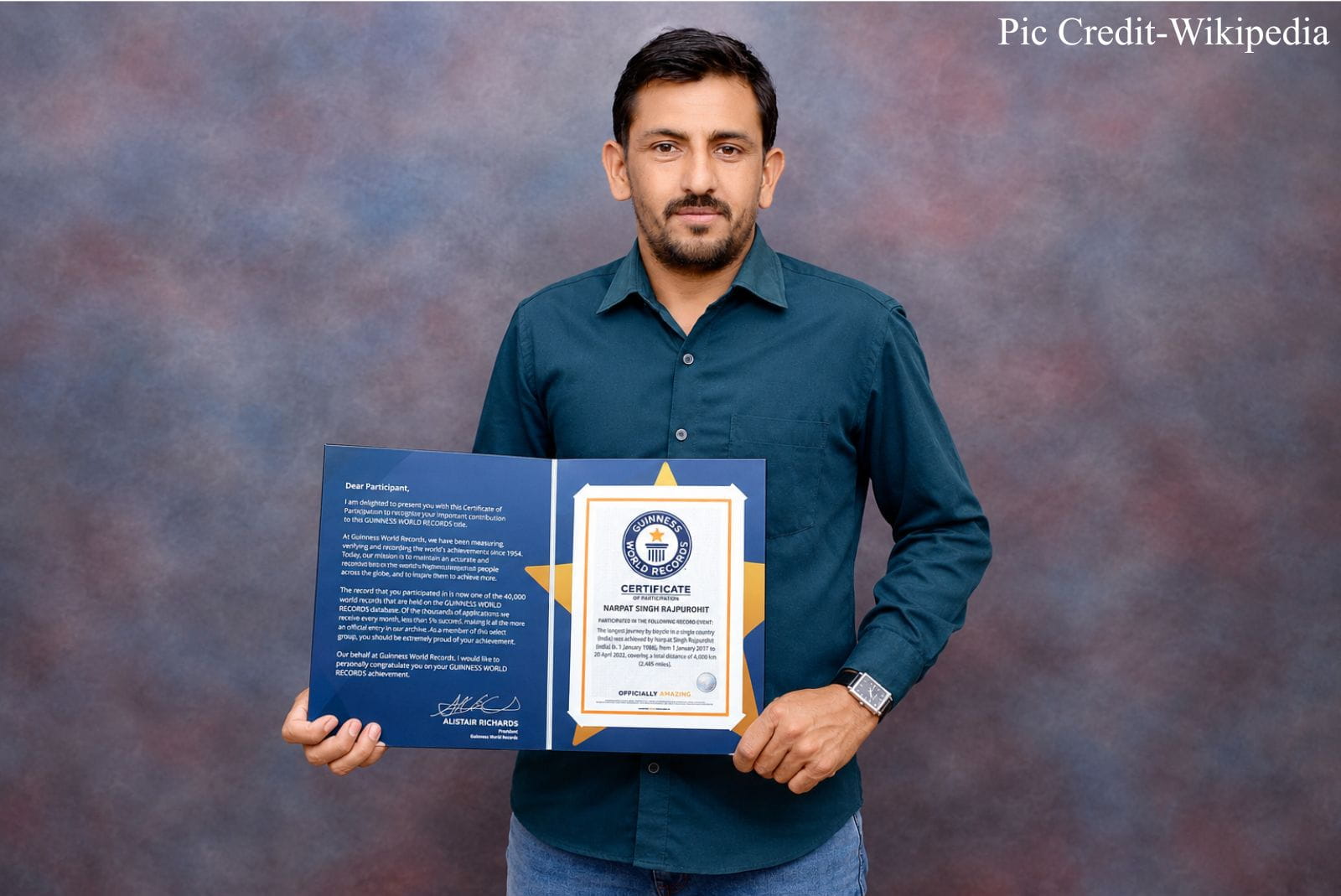
In the harsh desert landscape of Barmer, Rajasthan, life survives under extreme conditions that test the limits of both humans and wildlife. With summer temperatures often rising close to 50°C, water becomes scarce, shade is limited, and survival turns into a daily struggle. While people find ways to protect themselves from the intense heat, birds and small animals are often left vulnerable to the environment. In this challenging setting, Narpat Singh Rajpurohit has dedicated his efforts to protecting nature and supporting wildlife through simple yet powerful ideas.
Known widely as the “Greenman of Barmer,” Narpat Singh has spent years working on environmental conservation in one of India’s most difficult climates. His mission is rooted in a deep understanding that even the smallest acts of care can make a meaningful difference to the ecosystem. From planting trees to creating water sources for animals, his work focuses on practical solutions that directly address the challenges faced by desert wildlife.
One of his most innovative contributions came from observing a growing problem during the peak summer months. Birds, especially smaller species like sparrows, were struggling to find safe nesting spaces. The combination of rising temperatures, deforestation, and rapid urban expansion had reduced the availability of natural shelters such as trees and dense vegetation. Without these safe spaces, many birds were exposed to heat stress, dehydration, and threats from predators.
Instead of relying on large-scale infrastructure or expensive environmental programs, Narpat Singh turned to a simple and creative solution. He noticed that coconut shells, often discarded outside temples and public spaces, were widely available as waste material. Rather than allowing them to go unused, he began collecting these shells and repurposing them into bird nests.
After cleaning and preparing the coconut shells, he transformed them into small, natural shelters that could be easily attached to trees or walls. These nests provide shade, insulation, and protection from predators, making them ideal for birds living in extreme desert conditions. The structure of the coconut shell naturally helps regulate temperature, keeping the interior relatively cooler compared to the outside heat.
This initiative quickly gained attention because of its simplicity and effectiveness. What began as a small personal effort soon turned into a community-driven movement. Through awareness campaigns and social media videos, Narpat Singh Rajpurohit began demonstrating how anyone could create similar bird nests using easily available and recycled materials.
His message emphasized that environmental protection does not always require large budgets or advanced technology. Instead, it often begins with awareness, creativity, and the willingness to take small steps. By using waste materials that are commonly ignored, he showed how sustainability can be integrated into everyday life.
Alongside his bird conservation efforts, Narpat Singh continues to work on broader environmental initiatives across Barmer. Tree plantation drives remain an important part of his mission. He regularly participates in campaigns that aim to increase green cover in the desert region, helping to restore ecological balance and provide long-term benefits to wildlife.
Water conservation is another key area of his work. In desert regions where water scarcity is a persistent issue, he helps create and maintain water points for animals and birds. These water sources become lifelines during the peak summer months when natural water availability drops significantly. His efforts ensure that wildlife has access to basic survival needs even during extreme weather conditions.
What sets his work apart is its accessibility. Instead of presenting environmental conservation as a complex or distant concept, he brings it into the hands of ordinary people. Farmers, students, and local residents are encouraged to participate in small activities such as installing bird nests, planting trees, or placing water bowls outside homes. This grassroots approach helps build a sense of shared responsibility toward nature.
Over time, his efforts have inspired many volunteers and environmental enthusiasts across Rajasthan and beyond. People who come across his work often replicate his methods in their own communities, spreading awareness about bird conservation and sustainable living.
The story of Narpat Singh Rajpurohit is not just about saving birds; it is about rethinking how humans interact with nature. In a world where environmental challenges are often seen as overwhelming, his work demonstrates that meaningful change can begin with small, thoughtful actions.
His coconut shell bird nests have become a symbol of innovation driven by compassion. They remind us that solutions to environmental problems do not always lie in large institutions or expensive projects. Sometimes, they are found in everyday objects and simple ideas that are executed with care and consistency.
Today, as climate change and habitat loss continue to affect ecosystems across the world, Narpat Singh’s work stands as an inspiring example of local action with global relevance. In the unforgiving heat of the desert, he has shown that kindness toward nature can create pockets of life, hope, and survival.
Through his dedication, Narpat Singh Rajpurohit continues to prove that even in the harshest environments, humanity can find ways to protect and nurture the natural world—one bird, one nest, and one coconut shell at a time.