




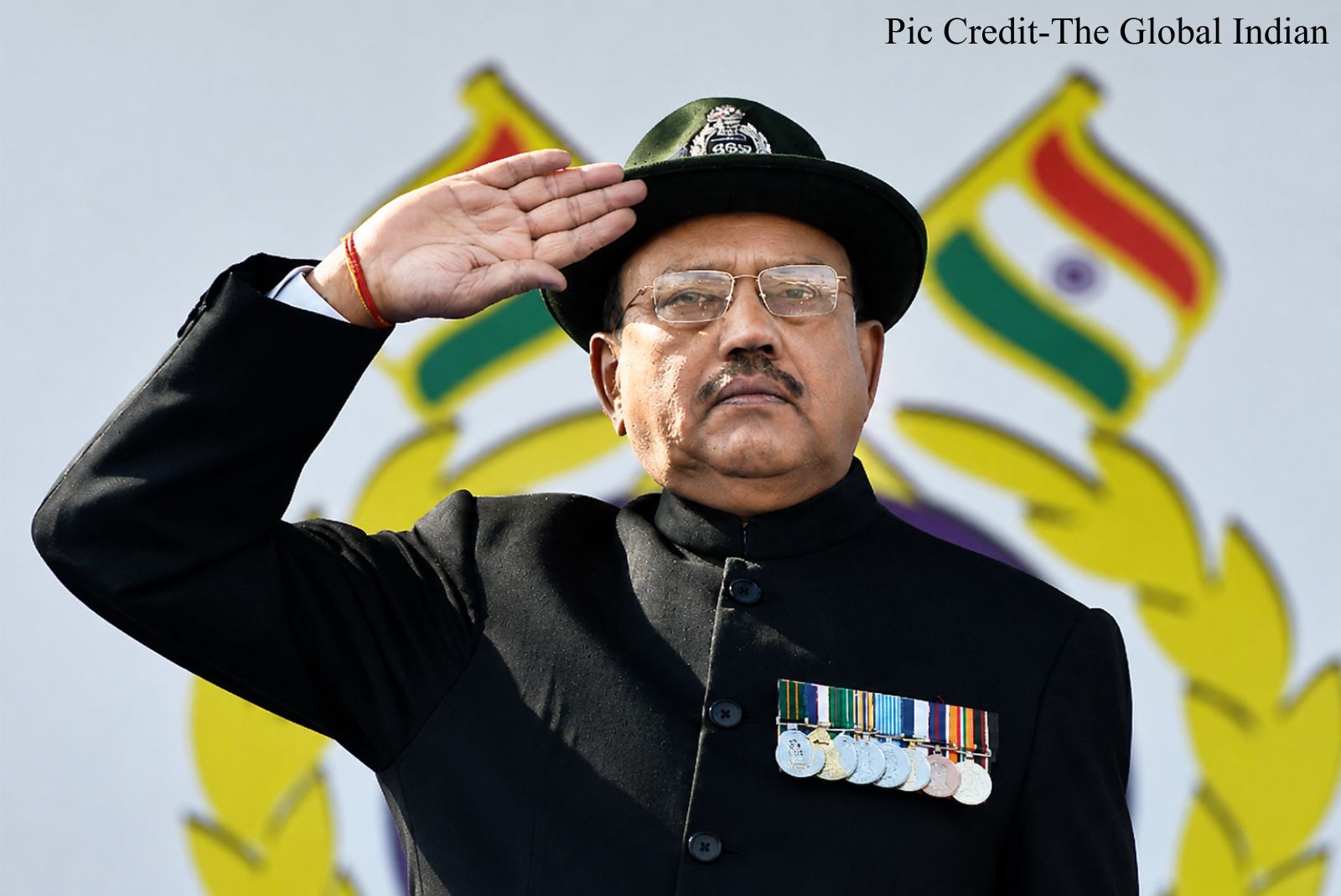

Today, Ajit Doval is widely recognized as one of India’s most influential security strategists and the country’s National Security Advisor. Known for his decades of experience in intelligence and counter-terrorism, Doval has played a key role in shaping India’s security policies. However, long before he became a household name, he was involved in several high-risk operations that demanded extraordinary courage, patience, and strategic thinking. Among the most significant of these was the hijacking of Indian Airlines Flight IC 814 in December 1999—an incident that remains one of the most challenging hostage crises in India’s history.
On December 24, 1999, Indian Airlines Flight IC 814 took off from Kathmandu, Nepal, for New Delhi carrying nearly 190 passengers and crew members. What was supposed to be a routine flight soon turned into a nightmare when five armed terrorists hijacked the aircraft shortly after it entered Indian airspace. The hijackers forced the plane to change course, triggering a week-long international crisis that gripped the nation.
The aircraft was flown across multiple locations, including Amritsar in India, Lahore in Pakistan, and Dubai in the United Arab Emirates, before finally landing in Kandahar, Afghanistan. At the time, Afghanistan was under Taliban control, making the situation even more complicated. The hijackers demanded the release of several jailed terrorists and threatened the lives of the passengers if their demands were not met.
As the crisis escalated, the Indian government assembled a team of senior officials, intelligence experts, and negotiators to manage the situation. Among them was Ajit Doval, then a senior officer in the Intelligence Bureau. Doval was part of the team sent to Kandahar to engage with the hijackers and assess every possible option for securing the release of the hostages. His experience in intelligence operations and crisis management made him one of the key figures involved in the negotiations.
The challenges facing the negotiators were immense. Hundreds of innocent lives were at stake, and every decision carried potentially devastating consequences. The aircraft was parked in hostile territory, military intervention was highly risky, and communication with the hijackers required extreme caution. Throughout the standoff, Indian officials had to balance national security concerns with the immediate need to save the hostages.
For seven tense days, families across India waited anxiously for news. Television channels provided continuous coverage, and the nation followed every development with concern. Behind the scenes, negotiators worked around the clock, trying to reduce the hijackers’ demands and secure the safe release of the passengers. Reports from the period suggest that the negotiation team managed to narrow the terrorists’ demands significantly during the course of the discussions.
Eventually, on December 31, 1999, the crisis came to an end. The Indian government agreed to release three jailed terrorists, including Masood Azhar, in exchange for the hostages. The passengers and crew were finally freed after a week of captivity. Although the decision remained controversial and sparked debate for years afterward, it ensured the safe return of the remaining hostages.
The IC 814 hijacking had far-reaching consequences. It exposed vulnerabilities in aviation security and prompted India to strengthen its counter-terrorism and crisis-management capabilities. The incident also influenced future national security policies and became a major case study in hostage negotiation and intelligence operations.
For Ajit Doval, the Kandahar crisis became one of the defining moments of his career. Though he rarely seeks public attention, his role during the hijacking demonstrated the qualities that would later make him one of India’s most respected security officials—calmness under pressure, strategic thinking, and the ability to make difficult decisions in extraordinary circumstances. Doval’s long career includes numerous intelligence assignments, counter-insurgency operations, and hostage rescue efforts. He is also among the few police officers to have received the prestigious Kirti Chakra for his distinguished service and bravery.
More than two decades later, the IC 814 hijacking continues to be remembered as a turning point in India’s security history. While opinions may differ on the decisions taken during those tense days, there is little doubt that the crisis tested the resolve of the nation and the capabilities of those tasked with protecting it. For many Indians, Ajit Doval’s role during the Kandahar negotiations remains a reminder that true leadership often emerges not in moments of comfort, but in moments when hundreds of lives depend on patience, courage, and clear thinking under extreme pressure.